Tandal: A Feminist Archive of an Infrastructure in the Making

Infrastructures are concrete expressions of our desires and aspirations: of what to be and how to be. In the context of the recently inaugurated Atal Rohtang Tunnel in the tribal trans-Himalayan district of Lahul and Spiti, India, infrastructural aspirations have been visibly gendered. This mega-infrastructure deeply embodies a hierarchical and masculine vision – the top composed by engineering and geological expertise and the bottom by the able-bodied male migrant workers corporeally engaged with the infrastructure’s making (Sabhlok 2017). The tunnel as a masculine vision was further emphasized by Prime Minister Narendra Modi in naming it Atal Tunnel, after the Bharatiya Janata Party (BJP) male leader Atal Bihari Vajpayee, who approved its construction in 2002. This predictably followed with Prime Minister Modi declaring the tunnel on 3 October 2020 as Atal’s gift to the Lahulis, thus inscribing the infrastructure as a singular vision of Vajpayee and the BJP.

Rohtang, a mountain pass on the Pir Panjal Range at almost 4000 meters, is a defining feature of Lahul’s remoteness. This natural infrastructure that geographically and culturally demarcates Lahul from the southern district of Kullu has been central in imagining the tunnel as a social and geopolitical necessity. Colonial tropes of backwardness and isolation persist in locating Lahul valley and its people. Such categories, reproduced by the Lahulis as well, define the tunnel as the ultimate driver of development in this trans-Himalayan region. Existing national, regional and vernacular knowledge on this infrastructure are dominated by masculine understandings of geology, technology and geopolitics. These past narratives – concerning the tunnel and regarding other connected infrastructures such as roads – are of and about men who at different points in time have negotiated infrastructural possibilities with colonial and postcolonial bureaucracies. Hence, the tunnel is more than just material (Larkin 2013). Local memory has cemented it as a success story of brotherhood and geopolitical foresight by Atal Bihari Vajpayee and three prominent elderly Lahuli men, set against the backdrop of 1962 Sino–Indian War and the 1999 Kargil War. Arjun Gopal, known personally to Vajpayee, along with Tshering Dorje and Abhay Chand, are credited for their “strong lobbying” (Gharsangi 2002: 9) capabilities in making the tunnel a physical reality.

Dear Tandal,
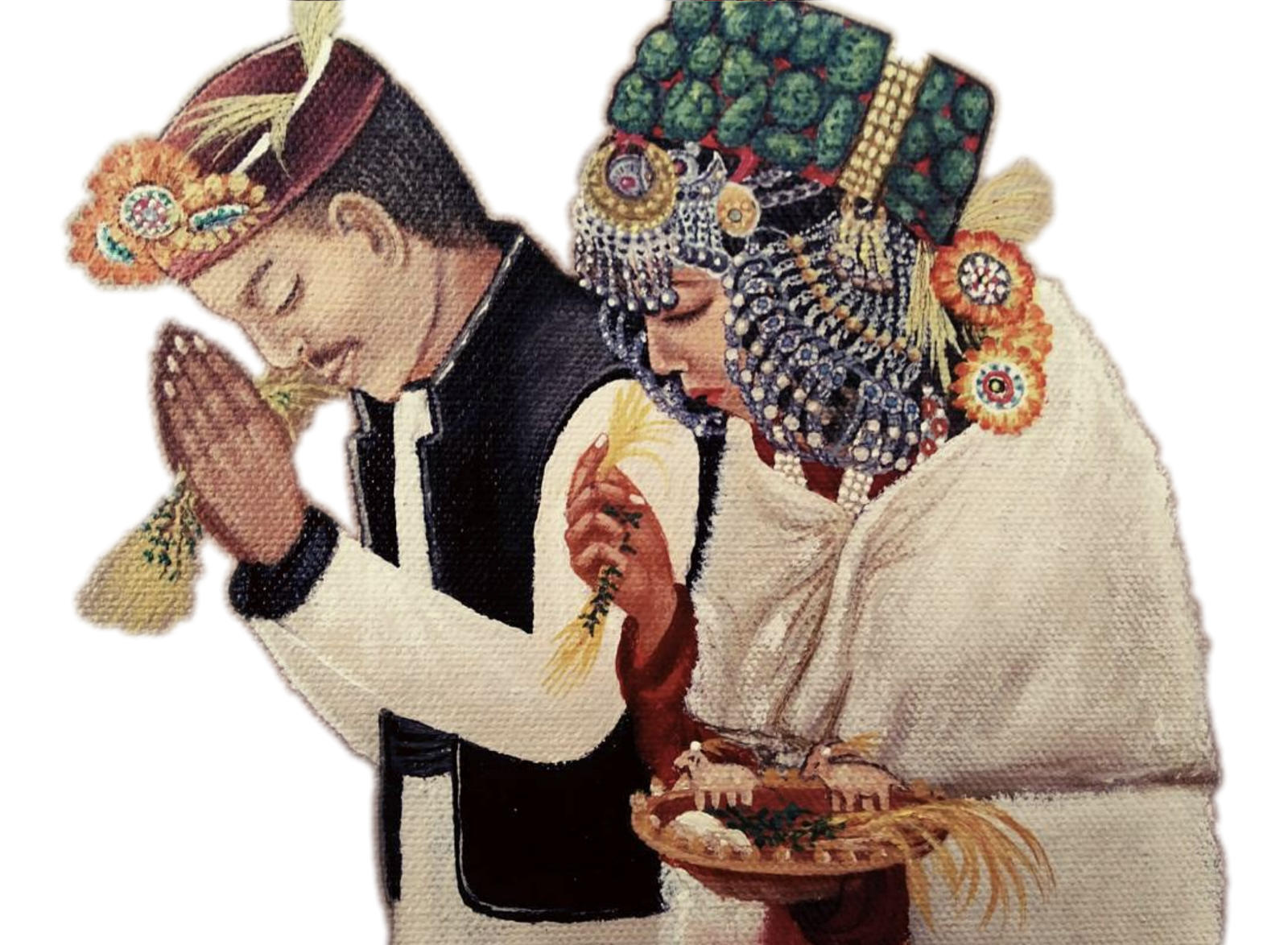
I heard you will come to life today. I hope your mother Pir Panjal is not deceiving us yet again, with her zillionth labour pain. You were to arrive five years ago. Never mind. Now, in 2020 and with a frugal bill worth 3200 crores, we are waiting for you, outside the operating theater. How can our arms tire when holding the Kalchhor (ceremonial libation) and Khatag (white scarf)? We, Lahulis, thank you for teaching us the art of waiting.
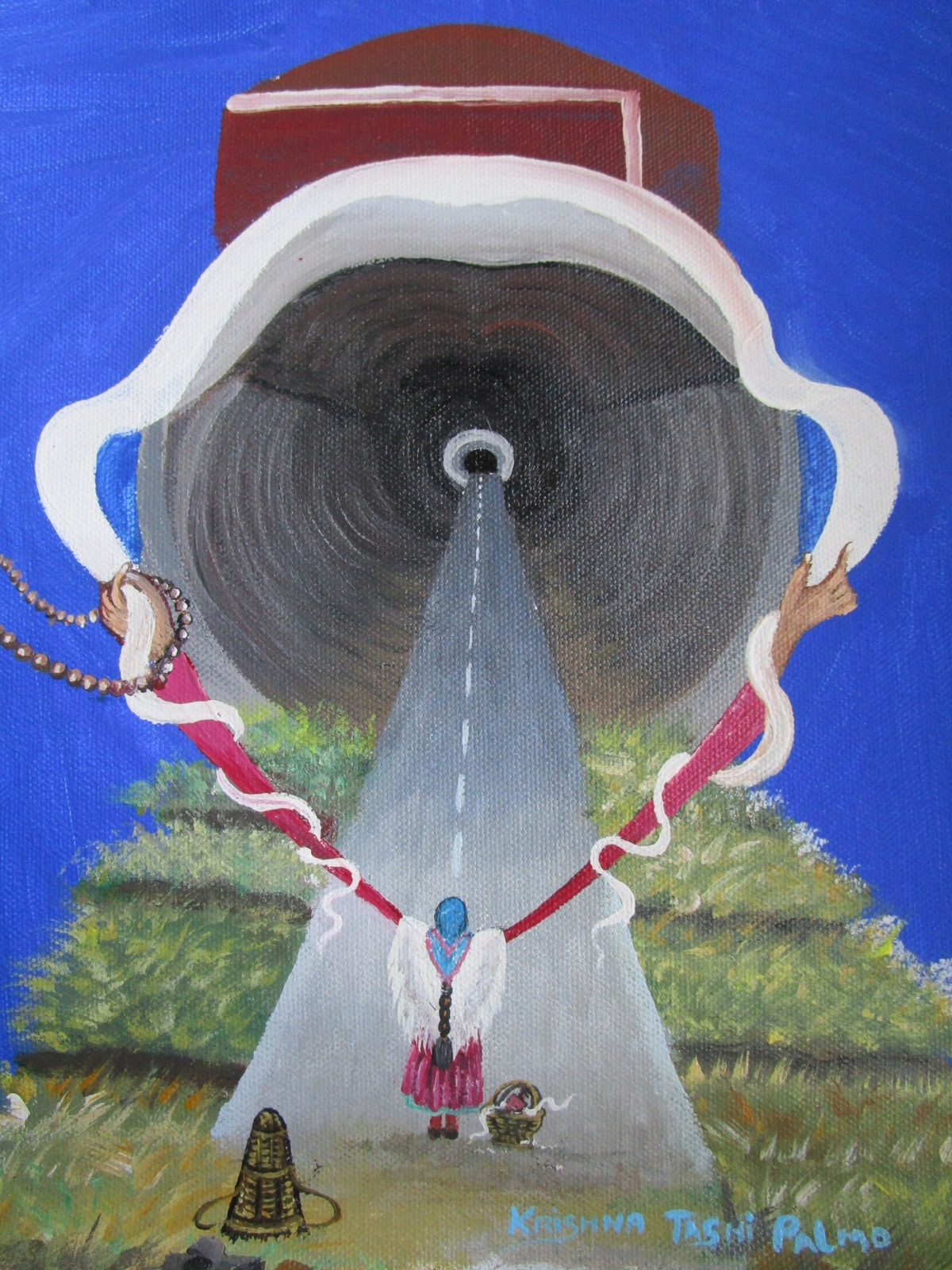
Your mother had a painful journey. She bled profusely in these years but doctors said her pains and cries were mere geological surprises. If not for the masses, you need to come alive for the media that gloriously announces the same old saga of your birth every few months. I heard you were even given a new name after some closed-door discussions. Atal Tunnel, Rohtang. Congratulations, this infrastructural feat of Bharat Mata is a Man. I do not wish to hurt you or question the choice of your name, but I must tell you that ever since you were conceived, I have only known you through the hesitant utterances of my Aama (mother) and Abi (grandmother): Tandal. I still get goosebumps recalling how softly and reluctantly my Abi first whispered your name to me, as if you didn’t belong to us. As if she didn’t want Meme (grandfather) to claim her eccentric pronunciation of your name. But each time Abi tries to unify you and Rohtang, she’s breathless. For us, you have overtaken Rohtang’s sacredness, for Abi, not as yet. How could you? Rohtang is her refuge. Rohtang is her sacred escape to the sky. Rohtang is her formless realm. You, in your enticing emptiness, are profoundly concrete, deeply earthly. Tandal, even today when she calls you out, you unsettle the warmth of our sun soaked tandoor room as you did back then. But my Aama and Abi too have cultivated faith in you. It shows in the dissolved color and coarseness of 108 rosary beads. They have obsessively chanted, prostrated and circumambulated on the doctor’s prescribed mantra day and night. Abi has consistently been complaining though. In the stubborn and overprotective care of your mother Pir Panjal, we didn’t justify our ways of being, she says. “What is this show of tribal tourism?”, she shouts at me even if she’s nearly lost her voice. “Have we already put our values and beliefs on sale?” Tandal, I am truly confused. Your doctors authorise worth in packaging our history, our rivers and mountains as tourist itineraries. Only now that I am learning my language, each lesson is an encounter with depths of your contamination. Lahul isn’t Lahul anymore. It’s a tourist place. As you are opening us to the world, the dakinis (female Buddha) and dakas (male Buddha) are retreating into caves, remerging into rocks and stones. The wisdom inflows of Chandrabhaga are drying out. Will ego and individuality flow now on? Abi’s rainbow body has shrunk visibly since the definitive announcement of your birth. She’s sleepless at night, unable to distinguish the ferocious mood of her guardian deity Palden Lhamo from those of men and machines churning inside you for the one last time. You know, your big mouth was once her fertile field where she sang and danced with the dakinis.Aama is waiting outside the operating theatre luminous in her goshen (silk brocade) cholu (attire). By her side is an inconsolable Chandrabhaga. Your bright and shallow eyes have possessed us. I heard they are the longest in the world. But will you have the courage to look into my Aama’s eyes? I should let you know, in my dream last night, she revealed her desire to transform your wrath into blissful radiance of the Khatag.
In the days following its inauguration, visitors flocked in their thousands each day to witness the country’s longest tunnel. This sudden influx into a valley previously inaccessible in winter, and lacking adequate tourism infrastructure, became a source of anxiety for many Lahulis. Localized disruptions, such as heavy vehicular traffic on narrow village roads, accidents and heavy littering by tourists, made evident the linear and pointed envisioning of strategic connectivity – in this case imagined by the Indian state – between Manali, Lahul and the contested northernmost border regions of Ladakh and Jammu and Kashmir.
The tunnel as an infrastructure, in turn, is emerging as a nucleus around which sociocultural boundaries and moralities are being actively (re)drawn every day. Locally, new ideas and visions of sustainable tourism are put forward and acted upon simultaneously. From a feminist lens, most of these emergent perspectives on tourism development have in common the framing of Lahuli women as hyper-visible symbols of cultural purity and tribal pride. This is a pride sustained by denying caste, class and gender inequalities within the tribe. The stereotypical image of Lahuli women clad in traditional outfits, decked in bright headgear, with bold silver and gold jewelry remains unchanged. This was visible once again in the banners of a Snow Festival recently organized across the valley as a first attempt to display, promote and preserve adivasiyat (indigeneity, in Hindi), simultaneously gesturing that Lahul is a territory now “open to the world.” Folk rituals and customary lifestyles, so far seen as elements of backwardness, are now being propagated as fuel for a future in tourism, in congruence with “what constitutes being tribal for the Indian state” (Gergan 2021).


Infrastructures in Lahul and Spiti can be seen as sites of defiance and submission. The tunnel, hydropower dams, village gates and pathways emerge as potent spaces where cultural notions of femininity are both disrupted and reinforced. When putting their bodies out in the open to oppose unwanted infrastructures such as mega-dams, women are readily acknowledged by the community as true protectors of tribal rights and identity. In the same breath, the Lahuli woman becomes an “unreliable subject” (Bhattacharya 2015: 158) when claiming equal ownership of land. Juxtapositions such as these reveal a delicate mesh of infrastructures, masculine politics and tribal patriarchy. For instance, in the peak of the Covid-19 pandemic, a village gate in Spiti and the tunnel entrance in Lahul unfolded as two distinct sites of power. The women of Kaza village in Spiti Valley utilized the village gate as a means to assert their right to monitor the threat of coronavirus. Women stopped the local minister, who was visiting Spiti for an official work trip, at the gate and demanded he undergo the mandatory quarantine. Shortly after this event, the same minister traveled to Lahul where his male supporters organized a formal welcome, to retaliate against what had transpired in Spiti. Lahuli women then obediently lined up outside the tunnel and displayed their respect by touching the minister’s feet, enacting a spectacle clearly aimed at the unruly Spitian women.
Even if the tunnel is largely seen as an equalizer by the community, the local planning leading up to the official day of opening set out some unequal foundations. A few days prior to the inauguration, the glaring absence of elderly Lahuli women in a group of fifteen elderly men chosen as passengers of the first bus to travel through the tunnel received backlash from young Lahuli women on social media. Young women, including ourselves, spoke out – asking if women are only seen as good for displays of culture, foregrounded just for dance performances or as strategic tools in opposing dams. Fellow young women called out the decision as “shameful” and “discriminatory.” While an increasing number of young women are voicing their opinions on the future of Lahul, our bodies are also emerging as sites of anxiety. Our intimate choices in love and marriage, especially with the non-tribal Other, hinder the conservative goals of tribal territoriality (Smith 2020). In everyday life, apprehension over women’s safety – whether walking carefree at night to attend gozi (a feast, in Pattani) or setting out to the fields alone early in the morning – and the felt urgency for CCTV cameras and police deployment during tourist season are discussions that characterize post-tunnel Lahul.

As a creative force too, the tunnel is at the heart of local oral, written and audiovisual storytelling. Sprouting at this very moment, these are crafted stories of hardship, aspiration and uncertainty. One such music video produced by the Layul Festival Organizing Committee, features a popular local male singer as the protagonist. The plot traverses two linear timescapes: a pre-tunnel era wherein men wore pastoral clothing and crossed Rohtang Pass on foot for work opportunities, and a post-tunnel era showcasing a modern Lahuli man donning Western formal attire, carrying a suitcase and being chauffeured. Aimed at both local and non-local Indian audiences, the video creators present the tunnel as an ‘old dream’ of connectivity and modernity come true. As a transformative force, alongside collapsing Lahul’s geographical remoteness, the tunnel is portrayed as fundamentally altering the image of the Lahuli man. Women, with their gentle bodily mannerisms in traditional garb, continue to play the background role in these new visual portrayals.

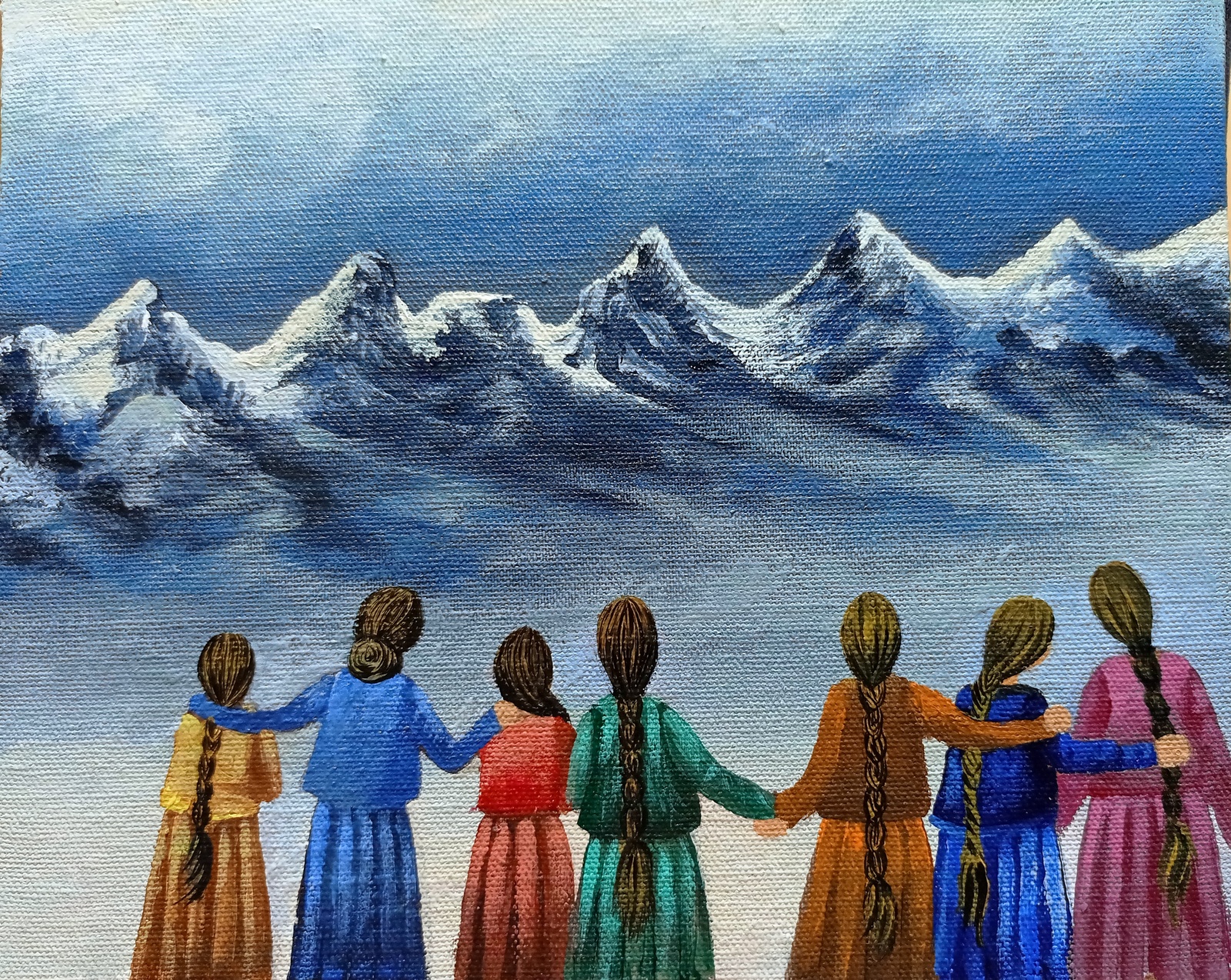
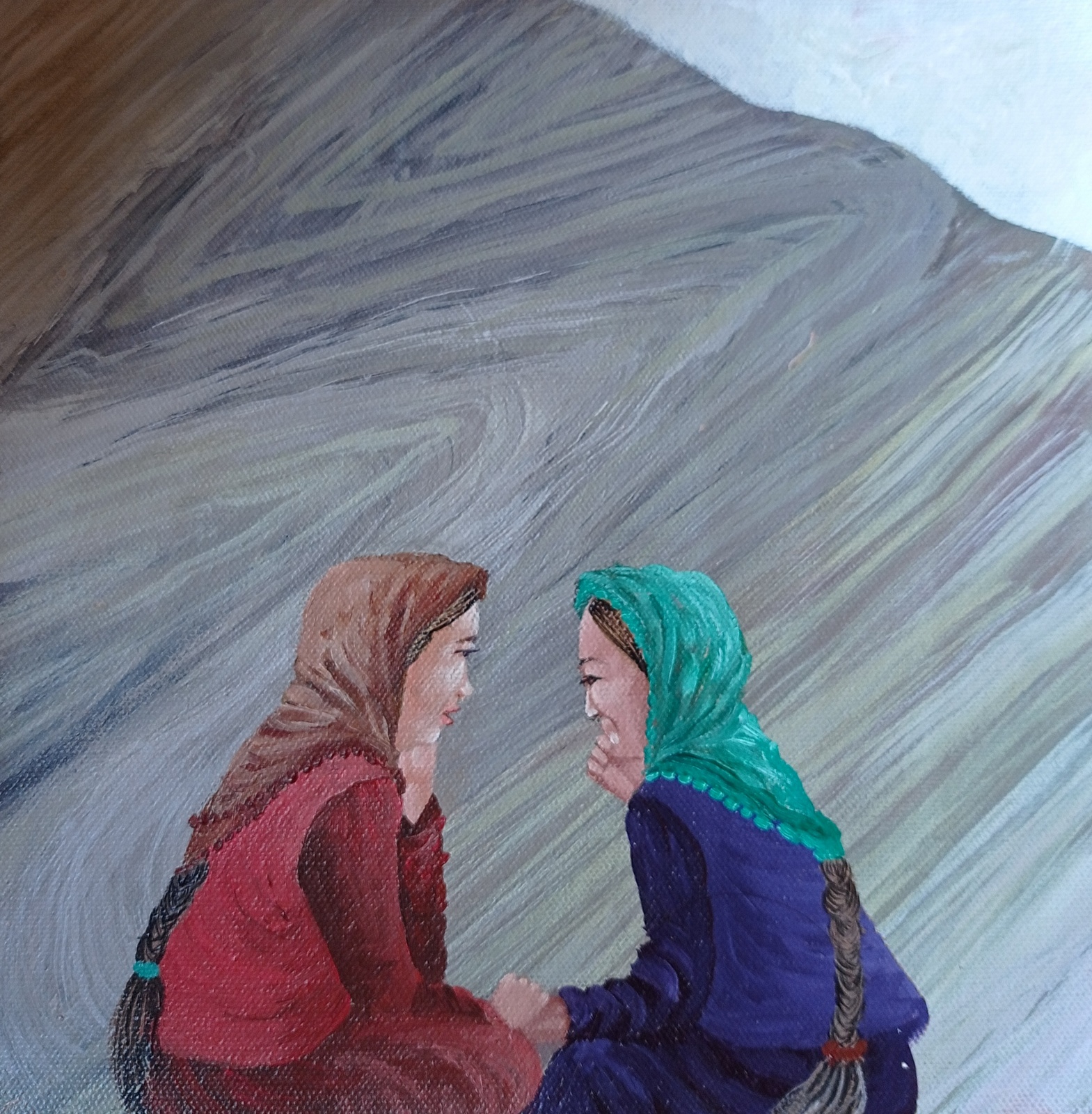
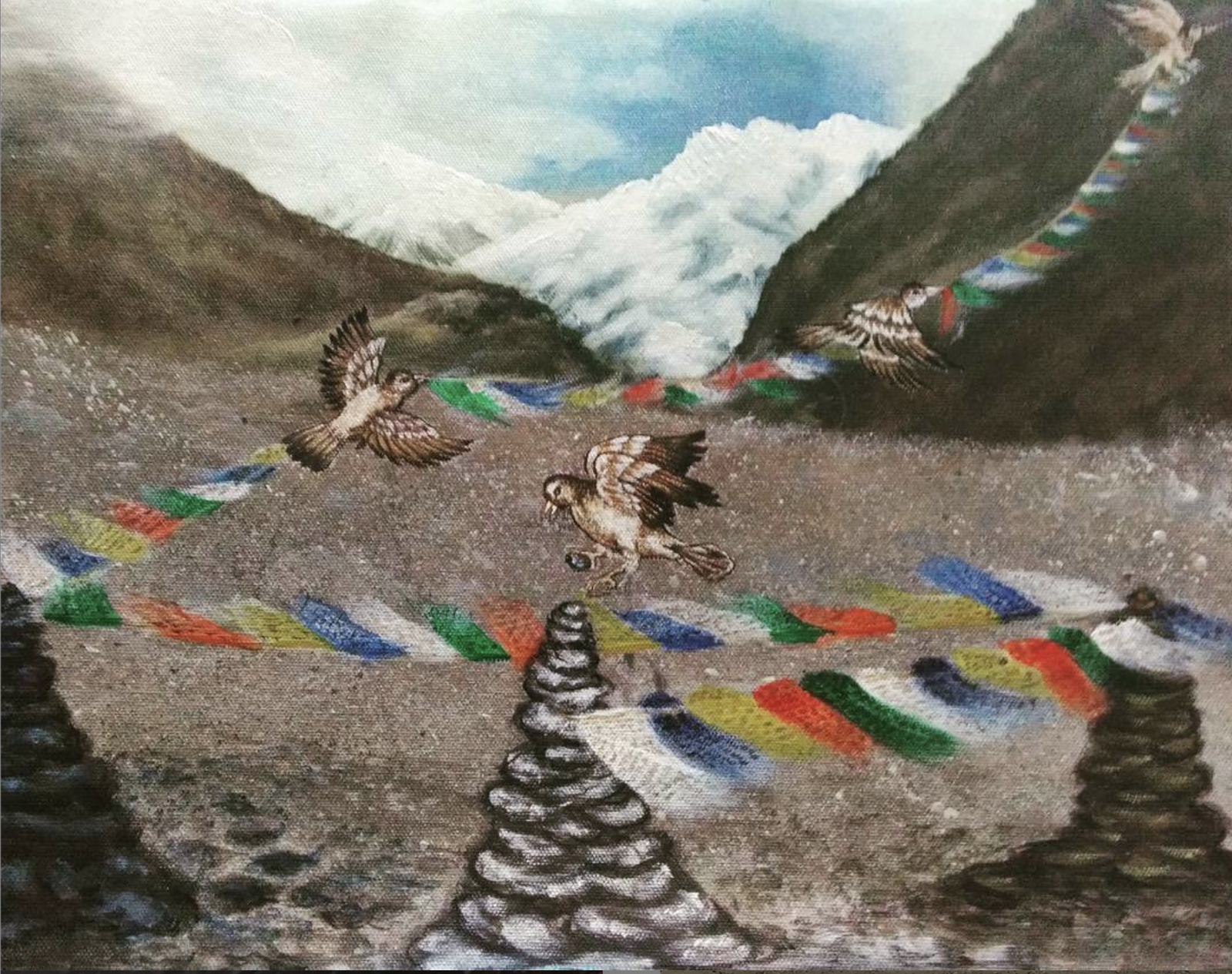
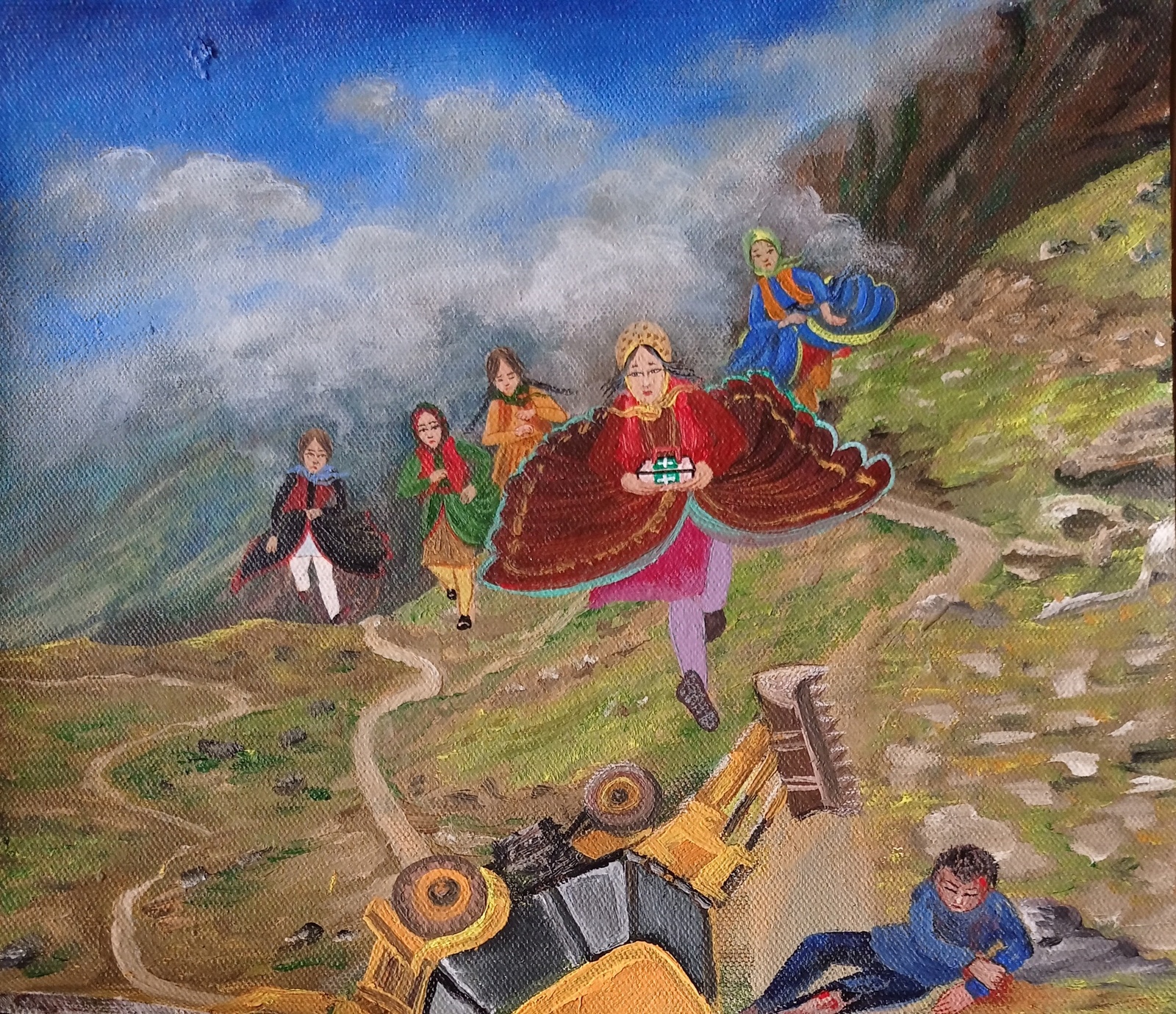
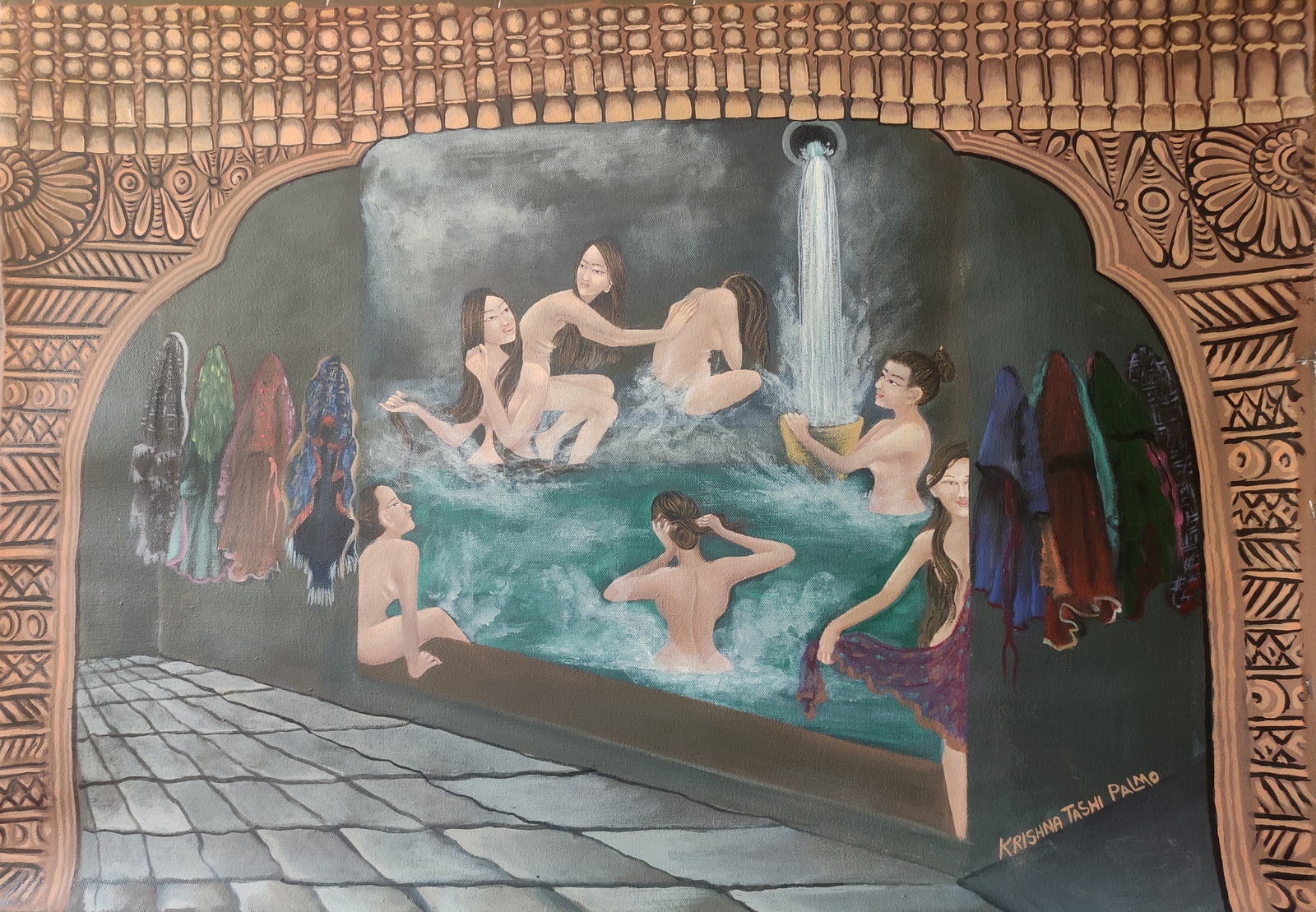
This is the space we are inhabiting and navigating right now as Lahuli women. Where do the social and political imaginaries of Lahuli women fit in the grand schemes of progress, tribal empowerment and geopolitical security? How do our grandmothers and mothers perceive and experience geopolitical infrastructures such as the tunnel? We explore some of these feminine imaginations and interpretations of the tunnel in this illustrated essay. As the first step toward a feminist analysis of infrastructures, we reflect upon the mundane entanglements of women’s everyday lives and desires with that of the tunnel. We have tried to navigate Lahul as a physical and an affective space, drawing from the lived experiences of our mothers, and our own gendered navigations in Lahul as a researcher and artist. As ‘insiders,’ here we intimately observe from ‘outside’: presenting the little we are able to grasp from Lahuli women’s seemingly (un)predictable ways of being. Doing so opened up for us the possibility and freedom of not “speaking about” Lahuli women – a heterogenous category – but “speaking nearby” them (Chen 1992), to ourselves, as we ask how deep a feminist knowing and solidarity we can forge. In making visible the feminist infrastructural imagination, we aim to place fluidities at the center, thus displacing the rigid, hierarchical and masculinist understandings of the tunnel. This is a feminist representation of infrastructure in the making – a fragment – one of the many that compose the living and growing archives of and about the tunnel.